
Our Classes
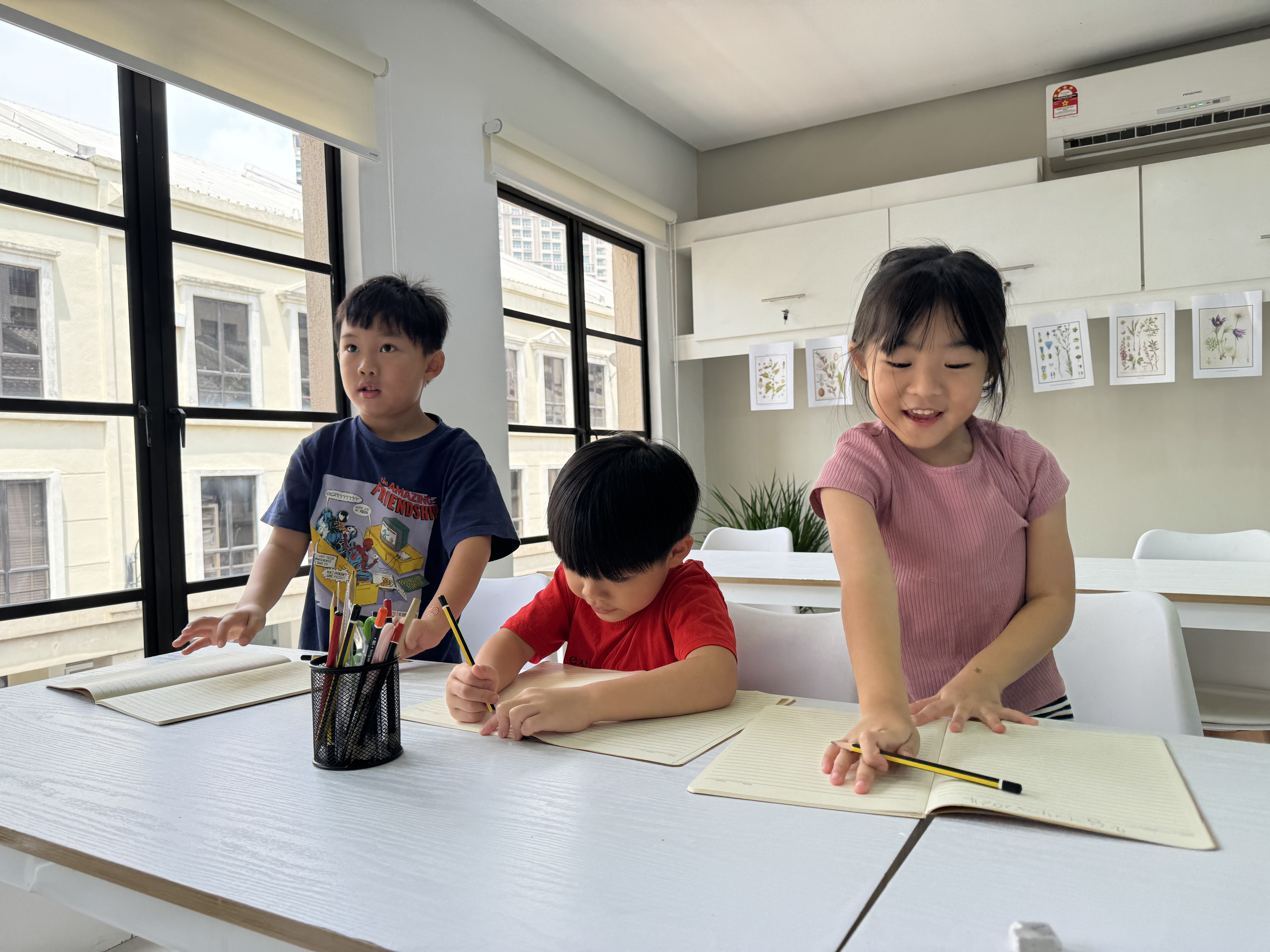
Structured programmes aligned with the British Key Stage syllabus that build real scientific thinking — week by week, term by term. For curious minds aged 5 to 11.
Our Classes
Structured programmes aligned with the British Key Stage syllabus that build real scientific thinking — week by week, term by term. For curious minds aged 5 to 11.
Our Classes
Structured programmes aligned with the British Key Stage syllabus that build real scientific thinking — week by week, term by term. For curious minds aged 5 to 11.
BRITISH KEY STAGES
Programmes by Age
4-7
YRS OLD
Little Explorers
At this age, the goal is early exposure. We want children to feel confident touching, observing, asking questions, and interacting with science in a physical way. The topics are close to the world they already know: materials, plants, the human body, light, weather, water, and everyday objects. Experiments at this stage help children build curiosity and confidence. Science becomes something they can see, touch, question, and understand.
Session Length
90 minutes
Class Size
Max 8 Students
Frequency
Weekly
Curriculum
Key Stage 1
RM 75
/per class (billed per term)
What's Included:
Weekly hands-on science lessons
Flexible class arragements*
Progress updates at the end of each term
BRITISH KEY STAGES
Programmes by Age
4-7
YRS OLD
Little Explorers
At this age, the goal is early exposure. We want children to feel confident touching, observing, asking questions, and interacting with science in a physical way. The topics are close to the world they already know: materials, plants, the human body, light, weather, water, and everyday objects. Experiments at this stage help children build curiosity and confidence. Science becomes something they can see, touch, question, and understand.
Session Length
90 minutes
Class Size
Max 8 Students
Frequency
Weekly
Curriculum
Key Stage 1
RM 75
/per class (billed per term)
What's Included:
Weekly hands-on science lessons
Flexible class arragements*
Progress updates at the end of each term
BRITISH KEY STAGES
Programmes by Age
4-7
YRS OLD
Little Explorers
At this age, the goal is early exposure. We want children to feel confident touching, observing, asking questions, and interacting with science in a physical way. The topics are close to the world they already know: materials, plants, the human body, light, weather, water, and everyday objects. Experiments at this stage help children build curiosity and confidence. Science becomes something they can see, touch, question, and understand.
Session Length
90 minutes
Class Size
Max 8 Students
Frequency
Weekly
Curriculum
KS1
RM 75
/per class (billed per term)
What's Included:
Weekly hands-on science lessons
Flexible class arragements*
Progress updates at the end of each term
Frequently Asked Questions

What's the difference between tuition and enrichment?
Tuition typically focuses on catching up, exam preparation, or reinforcing what's already being taught in school. Enrichment goes beyond that. At Flashpoint, children learn science through experiments, real materials, discussion, and guided inquiry — the focus is on how science actually works, not on getting through a worksheet. We still care about rigour and clear thinking, but the goal is for children to leave each class asking better questions and feeling more confident with difficult ideas, not just more prepared for a test.
What happens in a typical class?
Every class follows a similar rhythm. We open with a current news discussion — a recent discovery, invention, or scientific development — to ground the lesson in the real world. From there, we move into the day's topic, covering key concepts before diving into hands-on experiments where children work with real materials, build models, and discuss their findings with each other. While we follow the British Key Stage science syllabus as a foundation, we give children room to ask deeper questions and explore tangents that genuinely interest them. The goal is never just to cover the material — it's to make sure children actually understand it, and leave curious for more.
What will my child gain from Flashpoint classes?
Because we don't anchor learning on rote memorisation, progress at Flashpoint looks different from a school report card — and that's intentional. Rather than tracking whether a child can name the parts of a plant, we look at whether they can observe carefully, ask sharper questions, articulate their thinking, and connect ideas across topics. Over time, children grow more comfortable sitting with difficult problems, and that confidence compounds. Children who stay with us for a term or two often accelerate quickly — it's not unusual for us to move them into cohorts a year or two ahead, or to introduce secondary school concepts to children as young as 8 or 9 when they're ready for the challenge.
Is Flashpoint suitable for my child's level and interest?
Yes, in most cases — children come to us with all kinds of starting points, and we work with that. If your child isn't particularly excited about science yet, a workshop is a great first step: lower commitment, hands-on, and a good way to make science feel fun and approachable before committing to weekly classes. For weekly classes, we use age as a starting guide, then fine-tune through trial sessions and placement checks. If your child already loves science or is ahead for their age, we'll stretch them with deeper questions and more challenging ways to engage with the same topics. If they're shy, slightly behind, or sitting near an age boundary, we'll place them where they'll feel both confident and challenged.
What does flexible class arrangements mean?
We understand that life doesn't always go to plan. If you need to reschedule a class, simply let us know at least 24 hours in advance and we'll slot your child into a replacement session or add credits toward a future class. We want attending Flashpoint to feel flexible and stress-free — because the last thing we want is for an unexpected commitment to get in the way of your child's learning.
What's the difference between tuition and enrichment?
Tuition typically focuses on catching up, exam preparation, or reinforcing what's already being taught in school. Enrichment goes beyond that. At Flashpoint, children learn science through experiments, real materials, discussion, and guided inquiry — the focus is on how science actually works, not on getting through a worksheet. We still care about rigour and clear thinking, but the goal is for children to leave each class asking better questions and feeling more confident with difficult ideas, not just more prepared for a test.
What happens in a typical class?
Every class follows a similar rhythm. We open with a current news discussion — a recent discovery, invention, or scientific development — to ground the lesson in the real world. From there, we move into the day's topic, covering key concepts before diving into hands-on experiments where children work with real materials, build models, and discuss their findings with each other. While we follow the British Key Stage science syllabus as a foundation, we give children room to ask deeper questions and explore tangents that genuinely interest them. The goal is never just to cover the material — it's to make sure children actually understand it, and leave curious for more.
What will my child gain from Flashpoint classes?
Because we don't anchor learning on rote memorisation, progress at Flashpoint looks different from a school report card — and that's intentional. Rather than tracking whether a child can name the parts of a plant, we look at whether they can observe carefully, ask sharper questions, articulate their thinking, and connect ideas across topics. Over time, children grow more comfortable sitting with difficult problems, and that confidence compounds. Children who stay with us for a term or two often accelerate quickly — it's not unusual for us to move them into cohorts a year or two ahead, or to introduce secondary school concepts to children as young as 8 or 9 when they're ready for the challenge.
Is Flashpoint suitable for my child's level and interest?
Yes, in most cases — children come to us with all kinds of starting points, and we work with that. If your child isn't particularly excited about science yet, a workshop is a great first step: lower commitment, hands-on, and a good way to make science feel fun and approachable before committing to weekly classes. For weekly classes, we use age as a starting guide, then fine-tune through trial sessions and placement checks. If your child already loves science or is ahead for their age, we'll stretch them with deeper questions and more challenging ways to engage with the same topics. If they're shy, slightly behind, or sitting near an age boundary, we'll place them where they'll feel both confident and challenged.
What does flexible class arrangements mean?
We understand that life doesn't always go to plan. If you need to reschedule a class, simply let us know at least 24 hours in advance and we'll slot your child into a replacement session or add credits toward a future class. We want attending Flashpoint to feel flexible and stress-free — because the last thing we want is for an unexpected commitment to get in the way of your child's learning.
Not sure yet? Start with a trial.
Book a taster session for your child — zero commitment, all the fun.
Not sure yet? Start with a trial.
Book a taster session for your child — zero commitment, all the fun.
Read to Spark Your Child's Inner Scientist?
Book a taster session for your child — zero commitment, all the fun.